Wednesday, January 25, 2012

It's a Princess!

Once again, Scandinavian bloodlines have been extended with the birth of a future ruler! This time in Denmark. Denmark's royal palace has announced that French-born Princess Marie has given birth to her second child, a girl. Due to Danish tradition, the child's name is not revealed until the christening ceremony.
The mother of the new princess is Royal Highness Princess Marie of Denmark, Countess of Monpezat.The proud father is His Royal Highness Prince Joachim Holger Waldemar Christian, Prince of Denmark. The Prince is the second son of HM Queen Margrethe II and HRH Prince Consort Henrik, and the new-born princess becomes tenth in line to the throne.
Marie Cavallier was born in Paris, France , later moving to Switzerland where she attended boarding school. After graduating, She then enrolled at Babson College in Wellesley, Massachusetts and Geneva, Switzerland to study international business and economics. While on a Switzerland outing in 2005, she was noticed by Prince Joachim. After their courtship, Joachim and Marie married in May 2008. Marie gave up her French citizenship and converted to Lutheranism. The newborn is the couple's second child.
------------
The 42 year-old prince has two sons from a previous marriage with Hong Kong-born Alexandra Manley. The couple divorced in 2005, the first Royal split in 160 years in Europe's oldest monarchy.
Prince Joachim has a lengthy military record, beginning in 1987 while serving as a Platoon Commander of a tank squadron, rising in the ranks to commander in the Prince's Own Regiment, and remains active in the defense reserve at HQ Danish Division.
--------------------- The happy grandmother is HM Queen Margrethe II who, on January 14, 2012 celebrated her 40th year on the throne. As Queen, she serves as the Colonel-in-Chief of the Princess of Wales Royal Regiment. Other than that, the Danish Queen's duties are to represent the Kingdom abroad and to be a unifying figurehead of Denmark. As an unelected public official, she takes no part in politics . Although she has the right, she opts not to vote in order to avoid partisanship.The Queen and Prince Consort Henrik have two children and eight grandchildren.
The Royal Family of Norway descends from Frederick VIII of Denmark, Queen Margrethe II's great-grandfather Haakon VII of Norway.
Mother and daughter are reported to be doing well!

Friday, January 13, 2012

A Winter Vacation

Here in the Midwest , we have been waiting for winter. It finally arrived with a blanket of snow that should stay for some time! Now, skiiers and winter enthusiasts can finally get their activities underway. However, there are some who would rather not have winter arrive at all, and have become immigrants to warmer climates. For these people, winter is vacationtime. --------------------------- Most American vacationers choose to visit their ancestral roots in the summer or fall. There are very few Power-Point presentations of “Our Visit To Scandinavia In January”. Possibly cheaper? Less tourist-congestion with cheaper travel rates? Consider this four day winter Scandinavian experience doing something other than skiing:
Your plane lands in Tromsø where you will be driven to your fjord hotel to enjoy your dinner and, later, head for the glass-fronted sauna overlooking the fjord. After a good night’s sleep and breakfast, you board a fjord icebreaker on a Northern Lights hunt while enjoying the on-board hospitality of food and drink.
Tromsø has earned the reputation for being one of the best places in the world to view the Northern Lights. Stops will be made to visit small villages that welcome the winter visitors. That night, the famous show of lights is enjoyed.
Your next day will find you driven to remote Camp Tamok, on your way to a camp famous for Huskies waiting for you to lie back on the blanketed sled where anxious happy sled-dogs are waiting to get under way to help you enjoy a 16 kilometer safari, and what a view!
You will thrill to the course that follows the steep sided valley formed by the spectacular coastal mountain scenery.
The next day after breakfast, you have to choose whether to extend your visit to the winter shopping centers or elect to be transported back to Tromsø for your flight home.
---------------------- Or...Perhaps you wish to experience a winter adventure of life inside the Arctic Circle, assisting the Sami people of Finnmark on their annual reindeer migration. This opportunity is rare. The Sami have for years shunned interaction with outsiders. Many attempts have been made in the past to eradicate them and their 4,000- year-old culture.Taking part in the reindeeer migrations means eating, sleeping and living like a Sami person. You will become part of a journey which runs deep into the bloodlines of these people, dating back thousands of years.
---------------------
The journey begins in Kirkenes, northern Norway, close to the Russian border. Here, you will be trained in the working methods of the Sami people as they escort their reindeer from their winter grounds to the summer grazing area.
--------------------------
You live close to the reindeer, assisting the sami in herding by sled or skidoo, moving and sleeping when they do, your direct participation will be required at all times.You will sleep in a lavvu ( Sami tent) and gain insight into Saami cooking, done over an open fire.This means long hours and little sleep for up to five days.
You will probably spend the night popping out to watch the northern lights flash over the wild and remote area where a night is said to be a unique and special experience not soon forgotten.
Tourism in Norwegian Lapland has become a main source of employment and income, replacing traditional industries such as forestry.
When the herd stops, it’s time to say goodbye.
Adjø!

Thursday, January 5, 2012

Long Live The King And Queen!

Unless you live in an area populated by Scandinavians, you probably were not aware of the royal visit of King Harald and Queen Sonja of Norway as they visited the United States last October. The Norwegian Royal Couple made stops in the Midwest and New York City as they toured several Wisconsin and Minnesota colleges of Scandinavian backgrounds. In the fall/winter issue of News of Norway, a sampling of their visit was published.
-------------------------
Excited and enthusiastic crowds greeted the couple as they arrived at the various
destinations.
--------------------------
Augsburg College in Minneapolis, Luther College in Decorah, Iowa and St. Olaf College in Northfield, Minnesota have close ties to Scandinavian heritage and were honored by visits of the Royal Couple. Speaking to the citizens and students, here are portions of the King's speeches.
"My personal bonds to the United States have developed since my early childhood, when I spent five years here with my mother and two sisters during World War II. I have visited regularly since then, and my fascination and admiration for this beautiful and complex country is still growing.."
------------------------
" Norwegians who came to America have made an extraordinary impact in the process of building this country, and your history is full of examples of dedicated people who have left "footprints on the sand of time". You have been contributing to all aspects of American society, in a number of areas – like education, politics and business life. Every one of you should be proud of what you have accomplished in this great country...."
-----------------------
"We are gathered here tonight to celebrate what it means to be Norwegian and what it means to be American. There is something special about each and every one of you, a reflection of your combined Norwegian and American heritages. I wish you all the very best in preserving these values as well as taking care of the pride and awareness of your Norwegian ancestry. I am confident that these special bonds of friendship will stay alive in the future." ----------------------------------------
At their St. Olaf College visit, the King and Queen sat in on a "Beginning Norwegian" language class. In this photo, the king apparently had some humorous reply.
(Perhaps, they thought his accent was funny?!)
-------------------------------------
Their Majesties King Harald V and Queen Sonja were in the United States October 13-22, 2011. In Minnesota and Iowa, the Royal Couple met with representatives from the state governments and visited Norwegian-American environs and institutions. In New York, the King and Queen were among the Honorary guests at the American Scandinavian Foundation’s Centennial Ball celebrating 150 years of cultural exchange and close relationship of the United States with our Scandinavian neighbors.
-------------------
A full report of their USA visit is available online at norway.org/royalvisit2011.

Thursday, December 29, 2011

So, What Did The Julenissen Bring You, This Year?

Her kommer julenissen!
Every year highlights some new product, and here in the USA, all attention had been on the ever-popular I-pods, Nooks, smartphones, etc. In Scandinavian countries, the top ten most popular gifts seem to be a bit different.

A survey found the favorite "Top Ten" gifts given to Scandinavian loved-ones showed some interesting articles.
The #1 Scandinavian gift? Take a look around. Check out all the people wearing clogs . The clog has become popular for daily wear. Today, Scandinavian clogs come in all shapes and sizes and are available in various materials, from soft rubber to the traditional wooden clog. A popular brand for Scandinavian clogs is Dansko, which was founded in Denmark. Coming in number 2: Another very popular Scandinavian gift is a Norwegian sweater, which travelers can find all over Scandinavia. Online, you can purchase Norwegian sweaters from Selbu and Dale of Norway, authentic Norwegian companies. Norwegian sweaters are cozy and warm and come in various styles and sizes.

--------------------------

Number 3? Everyone loves colorful photos of the Scandinavian regions. Stunning photos of every imaginable country scene from fjords to picturesque city scenes are always valued as home decorations.

Our next choice would be books. Subjects of everything Scandinavian from history to the modern day in photos and text. There is always something to learn, whether it's the Vikings or the Royal Family.
-------------------------------

And who doesn't enjoy the sound of an Angel Chime? While originating in Scandinavia, angel chimes have made their way around the world , and are now available in many places at low prices. The heat from the candles turns the top of the chimes, and the angles move across the small bells attached, making a beautiful - but subtle - tinkling sound.

----------------------------------------------- Number 6th choice goes to the world-famous Dala Horse. At Christmas time, a delicious chocolate treat. At any other time, a treasure! A Dala Horse is a unique Scandinavian gift inspired by Swedish handicraft. Traditionly, a carved and painted wooden statuette of a horse that originated in the Swedish province of Dalarna. In the old days, the Dala horse was mostly used as a toy for children. But it’s trading value made it a valuable comodity.It was in the small log cabins deep in the forests during long winter nights in front of a log fire that the forerunner of the Dala horse was born. --------------------- Using a knife, woodcarvers made toys for their children.1623—nearly 400 years ago. In the 19th century, Stikå-Erik Hansson from the village Risa in the parish of Mora introduced the technique of painting with two colours on the same brush, still used today. ( In the book "The Wooden Horses of Sweden," it was discovered that this famous Dala painter is buried in a small churchyard in Nebraska after having immigrated to the Midwest in 1887 at the age of 64). He had changed his name to Erik Erikson upon coming to America and is buried at Bega Cemetery in Stanton County Nebraska, outside of Norfolk.

-----------------------

Number 7 ? Many gifts included a railroad pass. The EUrail Scandinavia Pass offers a flexible and reasonably priced transportation option for travelers exploring one or more countries of Scandinavia by train, on just one train ticket. A valuable gift for a traveler.

---------------------

Most everyone enjoys good music. Popular musicians are featured on CDs , and not all are ABBA. Scandinavia's Sissel is a very popular musician. Pleasant to listen to, and also enjoyable to view! Ninth place goes to a gift of artwork and design. And bringing up the final 10..A pipe and SNU for the tobacco lover. Snu is chewing tobacco in Scandinavia. (We know it as "snoose"). Pipes and tobacco are very popular in the cold of winter.

-------------------------

No mention of any electronic equipment, so we can assume that this list for for the adults.

GODT NYTT ÅR!

Saturday, December 24, 2011

Pass The Glögg, Please!

You have prepared the menu for your guests, but what should the beverage be??
How about a traditional drink- Glögg?!
  Samuel Johnson, author of the first English dictionary, wrote "Claret is the drink for boys, port for men, but he who aspires to be a hero must drink brandy." By that definition, Scandinavian glögg, will make us saintly. Glögg, pronounced glug, is a sweet, high-octane, mulled wine, which is to say it is made with a potpourri of spices and all three of the above: Claret (red wine), port, and brandy, and is served warm. Especially popular around Christmas, it is the perfect cold weather drink, warming the body and soul from the inside out.
-------------------------------------------- How does it work? The warm liquid raises the temperature of the mouth and stomach slightly, and because alcohol is a vasodilator, it forces blood to the skin, making us feel warm and blushing on the outside
---------------------------------------------- Glögg is the traditional drink in Sweden and Finland during the six weeks leading up to December 25--a cold, dark time of year in Scandinavia. This glögg recipe resembles a variety of historical mulled wines, such as wassail.
According to the Wine & Spirits Museum in Stockholm, King Gustav I Vasa of Sweden was fond of a drink made from German wine, sugar, honey, cinnamon, ginger, cardamom and cloves. It was later named "glödgad vin" in 1609, which meant "glowing-hot wine." The word "glögg" is a shortened form, and first appeared in print in 1870.
Its popularity spread throughout the European nations and in the 1890s it became a Christmas tradition. It was often used as a health potion and perhaps for a wide variety of ailments, especially muscle strains induced by shoveling snow.
---------------------------
Perhaps you are wondering what is in this drink, and how can I make it?.
Wine trader’s glögg Here is a recipe from 1898 taken from the blending manual of an unidentified wine merchant. 181 liters Wine Blend mixed from full-bodied red wine, fortified wine and Port wine cask sediment. 188 liters Cognac 64 liters Sherry 90 kilos Sugar 425 grams Cinnamon 260 grams Cardamom 250 grams Bitter Almond 6 kilos Raisins 100 pods Vanilla
-----------------------------------
When you are ready to serve,warm it gently in a saucepan over a low flame or, better still, in a crockpot. Serve it in a mug and, don't skip this, garnish it with a strip of fresh orange peel, twisted over the mug to release the oils. Drink while seated and give your car keys to a friend.
Note: For a nonalcoholic version, use water or orange juice, and substitute 3 cups Concord grape juice for the wine. Omit sugar, and follow glögg procedure.

Sunday, December 18, 2011

Christmas Is Coming...

Christmas is coming...
Our Advent Calendar has one more week and Christmas Eve will soon be upon us. The celebration will be in full swing.

In ancient times, long before Christianity came to Scandinavia, "Jul" or "Yule" marked the peak of the winter solstice. It became a mid-winter celebration of the transition from the longest dark winter night to spring, December is the darkest month of the year in Scandinavian countries and marks the time when " the sun turns" and days began to lengthen. Christmas spirit lights up the dark nights with cheer and warmth. Norway, located in the north of Europe, has the longest and darkest winters in Europe. It’s also thought to be the least church-going country in Europe. Jul was celebrated as a drinking season earlier in the year, but Norway’s King Haakon I moved the heathen custom to December 25th to celebrate the birth of Jesus. -------------- Early Yuletide, meaning "the turn of the sun" or the winter solstice ,welcomed the light of the ceremonial candles and the abundance of fresh meat in this time of the year to slaughter the animals--which made more sense in that subsistence economy then feeding them through the winter. It was also a time of warmth as the men harvested the Yule Log. This ceremonial log was originally an entire tree that was brought into the house with great ceremony. The butt end was placed into the hearth while the remainder of the tree stuck out into the room.. The tree would be slowly fed into the fire and timed to last the entire Yule season. --------------------- The Christmas tree would be decorated by the adults, the children would not be allowed to see it until the appropriate time. However, the children had a task of preparing a bowl of porridge to be given to the little gnome who lived in the attic or in the barn. If ignored, this little elf would be capable of great mischief during this Yule season and the upcoming spring season.

The traditional Scandinavian cuisine for the Christmas Eve meal might be a variety of cold and warm delicacies like fish, sausages, ham, salad and desserts. Herring and lutefisk are traditional fish dishes. Glogg and schnapps would be the beverages of choice as everyone enjoys the evening, anxiously awaiting the "Julenisse", a Scandinavian version of Santa Claus. This welcome visitor has no reindeer, perhaps a sleigh pulled by a goat. He also carries a load of simple gifts in a bag on his back for all good Scandinavian boys and girls.

-----------------------------------

Christmas Day will be marked with a journey to church to light candles and lay wreaths on family graves. The tradition of layng a spruce wreath and lighted candles or lanterns began in the 1900s, following World War II. Danish Christmas trees were decorated by Danish flags after the war. During the Nazi occupation, Danes were forbidden to display their flag and after the war, they used it as a Christmas decoration. This later spread to the rest of Scandinavia. ----------------- While it appears that we might not have a white Christmas here, areas of Scandinavia should find the ground snow-covered in the countryside with a moonlit night to help guide the Julenissen on his journey.

Jeg er så glad hver juleveld!

GOD JUL!

Wednesday, December 7, 2011

The Shortest Day Of The Year Is....

Our nights are getting longer as we count down the days to Christmas. December 6th marked the remembrance of St. Nicholas, a legendary person of history. This saint is not too well-known in Scandinavia, but is remembered as a generous soul to children, the poor, and men of the sea. The stories of St. Nicholas become intertwined with that of our famous Santa Claus, who will be arriving soon. Our advent calendar is progressing well. For those of you who have one for the children, you might enjoy an adult version, A very popular one is an Orange and Cloves calendar . All one needs is a fragrant orange, and the needed number of cloves to mark each remaining day to Christmas. -------------- To made this aromatic calendar, just insert the stalk end of the cloves into the unpealed orange in a pattern designed by you. Use a toothpick to design your pattern while creating the holes to insert the cloves. These "Calendars" can be placed anywhere you wish. Each day, pull out a clove and refresh the room with the pleasant aroma of holiday preparations.
-----------------------------------------------------
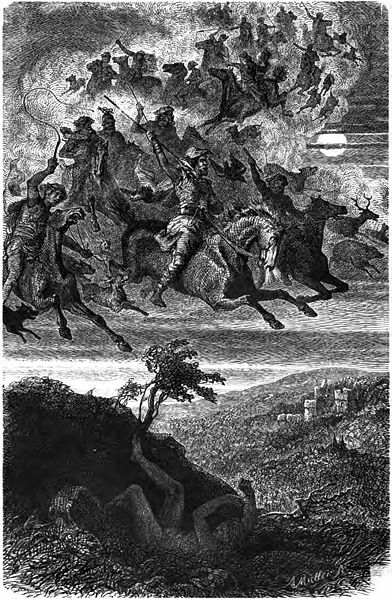
December 13th marks the darkest and shortest day of the year. This day earned a mark on the Scandinavian calendar, which was called a primstav--a wooden calendar stick. On this day Lussi langnatt ( Lucy Longnight), as such, Åsgårdsreia (Asagard parade--(a trail of unsettled dead souls) became a tradition. These restless souls would travel from farm to farm seeing if people were preparing for Christmas. If not, these wandering souls would vandalize the farm.. To protect themselves, the farmers would paint tar crosses over the doors of their houses and barns.On this long night, animals gained the ability to speak and were expected to be generously fed. This feasting was also expected in the farmer’s family. -------------------------------------
Saint Lucia Day is one of few saint days observed in Scandinavia and her story stretches back to the time of the Vikings and the Roman Empire. Lucia was a brave young Sicilian woman who heard of the persecution of Christians by the Emperor Diocletian and decided to take action. She gave one Christian family her entire dowry. This angered her betrothed husband, who then told authorities that Lucia secretly practiced Christianity. Lucia, who died a martyr’s death was much admired for her courage, generosity and faith. Her memory was not forgotten. ----------------------------------------------
It was not until after World War II that the modern celebration of Lucia in Norway was imported from Sweden. Luciadagen became a day to commemorate martyrs on the anniversary of their death ( or birth into heaven). In tradition, the eldest daughter of the family arises to treat her family in the early morning of December 13th bearing treats and wearing a crown of candles.
The day of feasting begins. Christmas is coming.