Sunday, September 15, 2013

Summer Has Ended? Really?


If Rip Van Winkle had just recently awakened from his lengthy sleep and viewed our Midwestern surroundings, he might be very unsure of which 2013 month  he has just re-entered. Temperatures have been varying constantly while the expected parched grass remains summer-lush. However, the calendar states that summer-time has ended and it is time to prepare for a long winter. It has been an unusual and almost amazing summer for it’s variety of weather, fires, droughts and floods. It will end with preparations for winter.


The winter season in Norway is lengthy and careful preparations are necessary for comfort and survival. Norwegian farmers must harvest sufficient hay and feed for their  livestock and farming land is limited.The total landscapes of Norway are dominated by mountains, forests, and grasslands. Only about three percent  of the land surface is suitable for cultivation or even arable farming. Because the majority of  farmers had to keep their animals indoors half of the year, it was necessary for them to utilize as much  land as possible in the summer  in order to raise winter feed for their cattle. Instead of having livestock graze lowland grass, the animals were sent into remote upland areas of the farm for the summer.
---------
 The practice of summer farming has been widespread over most of the country.  In general,
the upper pastures were only accessible from mid- June to mid- September due to the snow cover. The proper summer farms were normally situated so far away from the major settlement of the farm that people (mostly young women) had to stay there in small cabins to look after the livestock, milk the cows and process cheese and butter. These products were regularly transported back to the settlement at the farm or to the village. The farmers were then  able to cultivate fodder for the winter feedings as well as needed garden products in the lowlands, while  the animals were producing milk for the production of cereals, meat, butter and cheese. The animals were free to roam and feed off the mountain-grasses.
--------

Every evening, the cows were summoned to the mountain farm-yard to be milked. Individual herds were accustomed to the calls of the milkers who spent their time in small cabins during the summer, caring for their herds.

 Cattle-calls of these young farm-girls began to be widely used in a manner that began known as kulning, a high-pitched vocal tone we may associate with yodeling. This vocal style was also used by Sami herders to call their reindeer.
---------
This vocal style also served  to scare away mountain predators as well as having the singers enjoy the echoing sounds of the
mountain songs during the long days and evenings.It also served as a method of communication.
Other means of communication and herding-calls included fashioning pipes of reed or hollowing branches.
-------

A wooden trumpet , called a “Lur” was played in Scandinavia by shepherds, with the shepherd's instruments being held together with strips of birch bark instead of willow bands . It is believed that the lur was considered a musical instrument as well as an instrument of communication during the Viking Age. A lur similar to the Viking war instruments has been played by farmers and milk maids in Nordic
countries since at least the Middle Ages (probably longer). In Norway these lurs are called Neverlur (Birch bark lur).
These  instruments are still used, however, the practice of “summer farming” has ceased importance to Scandinavian farming practices today. Still being heard is the singing style of the girls and young women  tending the herds  in modern song-forms, while the pipes and horns have evolved into modern-day instruments. One such instrument combined a number of hollow reeds or hollowed wood of different lengths strapped together.
    ---------
The lur is still in use today in the folk music tradition. Egil Storbekken who died in 2002 was famous for his work with the lur. Other variations included an instrument of several hollowed reeds or wood of different lengths strapped together to form an instrument we know as panpipes. Several modern musicians have recorded musical selections utilizing this instrument based on Greek legends of a creature resembling a goat.
--------
In Greek mythology, Pam was the god of the shepherds and their flocks in mountain wilds and hills. He was
believed to be a  man with horns, a tail and legs of a goat who had fashioned a clumps of reeds into the famous Panpipes while  tempting the girls in the mountain farms with the sound of his pipes.
----
Although, the god Pan is not a modern issue and the practice of “Summer Farming” has been altered by modern motor vehicles, the music remains. To salute the closing of our unusual summer season, we might stretch our imagination as a musician performs on panpipes. The mountains might be the mountain farm areas as the herds come home from the mountain pastures at the end of summer. Click on the link. Skip the ad and enjoy!

http://www.youtube.com/watch?v=Dy3h6--fMBA

It has been an amazing summer!

Friday, August 23, 2013

The Nordlanders Are Coming!

The warning cry was heard by everyone on shore.  “ The ships of the Nordlanders are coming, once again!” The year was 794 and survivors of the previous encounter with the fierce warriors was not forgotten. The monastery at Northumbria, England had been unprepared as well as unarmed and had no chance of surviving the onslaught of the swords, lances and axes as the intruders plundered, killed and finally took survivors as slaves. Their return was expected to be more of the same. The men in the tall ships were not arriving as friends.

The earliest documented raids by the Vikings began in 793 at Lindisfarne, England. The  attacks began in 790 and continued until 840. The Vikings used shallow draught longships which were ideally suited for surprise raids on coastal locations that struck terror into their victims. The fleets were small, making a “hit-and-run” tactic of the attacks that could enable the raiders to row away as swiftly as they had come. The attacks were usually seasonal and isolated in small bands.
-----
   
But this time the fleet that was sighted on the horizon was coming in the year 2013. It was arriving early, but local residents were already at the landing site to welcome the arrival of several tall ships with their crews.The downtown Green Bay, Wisconsin riverfront was lined with people watching nine tall ships with majestic bows and tall masts in full sail glide in one by one from Sturgeon Bay.  They were arriving  to take part in  a weekend festival.
Four tall ships reached port an hour earlier than expected and their arrival was quite a show, entertaining spectators with cannon fire and crew members balancing 60-plus feet in the air while clinging to the masts.

Sixty-thousand people were expected to attend the  The Baylake Tall Ship Festival of Green Bay, a three-day festival that began Friday, August 16th. Highlighting the event was a three-masted majestic ship named Sørlandet, “The world’s oldest of the three Norwegian Tall Ships and the oldest full-rigged ship in the world still in operation” according to Adam Stacey, the Sørlandet Program Director. This ship is 210 feet in length, 29 feet wide with masts that reach 112 feet.
---------
 For decades, the ship has served as a training vessel for merchant mariners and was the first Norwegian
A crewmember working high in the mast
training ship to cross the Atlantic Ocean. It is one of nine sailing vessels now serving as  “School Ships”  used for offering “adventure sailings for young people of all ages” based in Kristiansand, Norway. Sørlandet was built in 1927 in Kristiansand. On her maiden voyage to Oslo in 1927, Sørlandet was inspected by HM King Haakon VII of Norway and HRH Crown Prince Olav. The ship crossed the Atlantic four times in 1981. In addition, she took part in a film shoot in New York and performed several cruises between Bermuda and Boston.

   The ship  became damaged during World War II, where she, among other happenings, served as an accommodation vessel for German submariners. It  was used by Germans to accompany their submarines and house Russian prisoners of war. While in action, the ship was partially sunk during the war.
----
The vessel was restored and ready to sail again in 1948. Wind was the only power source until 1958 when she was equipped with an engine. In 1974, she no longer served  as a public training vessel, and was sold to a private shipowner and docked  at Kilsund for three years, decaying considerably during these years. In 1977 she was bought back to Kristiansand by a shipowner  who gave her to the city of Kristiansand. In 1981 a foundation was established "Stiftelsen Fullriggeren Sørlandet" which is now the owner and operator and given  the new name Sørlandet.
-------
   
One of our Vennskap Lodge members, Judy Block is poised to ring the ship’s bell as she tours the famous Norwegian sailing ship in Green Bay. The ship and crew had just completed a boat-race from Chicago to Sturgeon Bay, however no details were available as to the outcome of the race. It has been said that the ship can reach a speed of 14 knots, using the “Iron wind” (engine) or 17 knots by sail.
---
There were several other ships on display at the Festival.  The U.S. Brig
  NIAGARA, a reconstructed vessel  made famous by Commodore Oliver Perry’s “DON’T GIVE UP THE SHIP” in the battle of  Lake Erie War of 1812.That ship was built as a battleship with cannons.

Another at The Port of Green Bay was THE PEACEMAKER, built in Brazil and later refurbished by a group known as the Twelve Tribes representing The U.S., Canada, Spain and several other countries built to be a training vessel to develope  wisdom, friendship, loyalty and good character in young people.

 
All nine vessels are currently on tour or being used as training institutions for merchant marines while the Sørlandet serves as a “floating classroom” for “Class Afloat”, a  program allowing high school juniors and seniors to train abroad the ship and visit ports in North and South America, Africa and Europe.

After touring The Great Lakes ports and attending several festivals featuring the historic ships of the sailing era, the Sørlandet set sail for their return trip to Norway.


 Instead of early historic plundering and death, the departure of these modern day  Nordlanders was one of friendship and happy associations between the Old Country and The New World. We look forward for the tall ship's return.

Tuesday, August 6, 2013

Where's the Light?

Summer is practically over. This very short season is followed by another short  season of colorful autumn when days begin to be shorter and temperatures begin a downward trend. We, here in the Midwest value these two seasons for warmth and beauty. Hardly a moment is wasted.

 It has been said that living in Norway makes Norwegians highly value summers  in their variety of outdoor activities. The idea is to store up as much happy sunshine as possible to last through the long and dreary winter. Our long winter nights are always relieved every morning by  light-filled days, however dreary. Can anyone imagine the long winter night lasting for days without the light of morning? It is typical for foreigners to be nervous about facing the dark winters in Norway.    
For those living above the Arctic Circle, there is a period of time when the sun doesn’t make it over the horizon. When the sun doesn’t appear for twenty-four hours, it is called a Polar Night. The higher you go above the Arctic Circle, the more Polar Nights there are. Tromsø, one of Norway’s northernmost cities  is 350 kilometres (217 miles) above the Arctic Circle and has sixty Polar Nights in a row. The largest differences  in Northern Norway is having midnight sun in the summer months and no sunshine at all during winter.
----------------
Norwegian Exchange School students attending U.S. schools  speak of having to endure daily doses of cod liver oil during the winter season. It is firmly believed that cod liver oil helps the body replace the loss  of the sunlight, due to its oily content of omega-3 fatty acids, vitamin A and vitamin D. Even though Norwegians eat a lot of fish products, it is normal for children and adults to have a spoonful of cod liver oil every day of the
year. This is preventative medicine taken to avoid winter SAD ( Seasonal Affective Disorder) , a winter depression that effects especially those living in the Nordic countries. Winter depression was actually discovered in the 6th century by the Gothic scholar Jordanes from his study of Scandza (Scandinavia).
----------------
Winter SAD is caused by a biochemical imbalance due to the  lack of sunlight. The main symptoms are tiredness and oversleeping, fatigue, a craving for sugary foods, feelings of sadness, guilt and a loss of self-esteem, irritability, and avoiding social and physical contact. Sound familiar? Norwegians are taught about this disorder in daily life, from family, in schools and by the government through TV campaigns. Awareness of winter SAD is a fact of life.Codliver oil, while unappetizing, is a necessity.
------------------


Despite all the negative characteristics of winter,   Norwegians really enjoy the dark season. It is a time of celebration with Advent,  St Lucia Day, Christmas, Julebukk, New Years, and the end of Christmas party. And without darkness, you can not see the Northern Lights. Often bright lights, lightboxes, and candles are used to provide intense ilumination. Many methods are used to break the spell of the constant darkness.
-----------------

A very unusual solution to the constant darkness is being conducted in a Norwegian town called Rjukan. Rjukan was formerly a significant industrial centre in Telemark, and the town was established
between 1905 and 1916 when Norsk Hydro started saltpeter (fertilizer) production there. Rjukan was chosen because Rjukanfossen, a
Rjukanfossen
104-metre waterfall, provided easy means of generating large quantities of electricity. Norwegian industrialist Sam Eyde came to the area around a hundred years ago and began the mining industry in the community, but felt the dark nights of winter caused employees to be less productive. To alleviate the problem, a cable car was built to transport people to the sunlight.   
Krossobanen Cable Car
   This was the first ever cable car to be built in Northern Europe in 1928. The cable car was a gift from Norsk Hydro to the people of Rjukan so that they could get up high enough to see the sun during the winter. 


                    Rjukan is located by the Hardangervidda National Park, known for the famous Gaustatoppen Mountain.
Gaustappen with Rjukan in the valley
--------------------

Rjukan is located in a deep valley surrounded by mile-high mountains. While the rest of Northern Norway views a least a murky part of winter sun, the sunlight is not seen in Rjukan for several months due to the surrounding mountain shadows. The famous  Gaustatoppen Mountain effectively blocks the light during this murky period of winter from September until  sunlight  fully returns in March.
            -----------------

 Norsk Hydro  opened in 1911 for the main purpose of  creating nitrogen for the production of fertilizer in nearby Vemmok. Nazi invaders converted the
isolated site to mass-produce heavy-water that was necessary to produce nuclear fission and  the creation of an atomic bomb.During World War II. Vemok was the target of Norwegian heavy-water sabotage operations resulting in the closing of the heavy water plant.  In 1988 the power station became the Norwegian Industrial Workers Museum.
-------------


Sam Eyde, Norwegian Industrialist.
In his time, Sam Eyde may have lacked funds to illuminate the city, but modern technology has improved and Rjukan citizens are continuing the efforts. Lately, strange lights are appearing from the tops of the mountain range. People are seeing bright shiny spots on the mountain  sides.
 -----------------
A construction crew has removed trees to provide an uninterrupted line of sight from the sun to mirrors, then, the sunlight is  reflected from mirrors to the people below. After laying a concrete foundation on the slope a quarter-mile above the town, they have installed  three huge mirror panels flown in from Germany by helicopter .The completed mirror assembly will measure about 540 square feet and will redirect the winter sun into the town center.

 It will illuminate an elliptical area over 2150 feet square. Solar power will allow a computer in the town hall to track the movement of the sun with sensors on the installation.Controlled by computer, the mirrors (known as heliostats) will reposition themselves to automatically track the sun's movements, hopefully revitalizing the town during the dark winter months.
--------------------

 Nestled deep in a valley, gloomy Rjukan citizens never receive direct sunlight between September and March. The big test begins in September, when the angle of the sun begins the winter shadows over Rjukan..


 Soon they will be able to see the light!


Wednesday, July 17, 2013

The Polar Express

                                  What’s the Weather Like Up There?

Summer has finally arrived in the Upper Midwest with thermometer readings in the often uncomfortable range. Southwest  U.S. states have seen midday temperatures hover around 100 ° F.  Death Valley, California , known as the hottest place on Earth, and driest place in North America holds the world record of 134° F. recorded  July 10th, 1913. A Death Valley area, aptly named Furnace Creek, holds the record for the highest ground temperature, once again in July, but in 1972 of a sizzling 201° F.

 There are no plants in the area to shade or soak up the sun and the heat bakes the desert surface. Summer sunshine has arrived and July is living up to it's reputation of high heat and humidity. We waited for it and it has arrived!
--------------

Up at the North Pole , the  heat and sunshine are not quite as intense, but still has influence on summer plant growth and melting ice.The famed Midnight Sun shines twenty-four hours a day for a long period during the Northern summer months north of the Arctic Circle. Imagine our attitude if we were subjected to 24 hour sunshine in July and August  with no relief of cool evenings breezes hre in the U.S.!
--------------
    
In the winter, most of the Arctic is hidden away under snow and ice. Sea ice expands to cover the entire Arctic Ocean, and the arctic lands gain a blanket of snow.
 In the summer, the sea ice retreats to the Central Arctic, opening channels and coastlines to open water.
---------
  The Arctic influences the weather and climate of the entire Northern Hemisphere, and the cool northern region helps to moderate the climate of the rest of the planet. The Arctic has warmed about twice as fast as the rest of the Northern Hemisphere in recent decades. Summer Arctic sea ice has declined by 40%, and snow is melting earlier in spring on the surrounding land. This dramatic change in the climate system is expected to affect weather patterns well beyond the confines of the Arctic. Some scientists have blamed our extreme fire hazards, hot temperatures and wild weather conditions on the unusual jet streams related to these Arctic conditions.
---------

The Arctic may be a forbidding place to travel, but its cold weather and unique climate patterns make it an important place for scientists to study.

  
Glaciologists drill through the ice using instruments that  measure what’s going on. This may sound easy, but there are multiple hurdles that must be overcome. Getting there is the first one. These ice shelves are heavily crevassed—landing 
even a small plane may not be an easy task! These changing conditions, whether man-made or normal cycles of nature are changing our world.  The normal “sea of ice” in places, averages 3 km ( 1.9 miles in thickness) and is constantly flowing to open water.

  Scientists have  reached the conclusion that the deep Arctic Ocean has been flowing for the last 35,000 years during the chill of the last ice-age and warmth of our modern time
----------
 Glacierologists have been noticing changes in an icefield located in the western side of Antarctica known as the Pine Island Glacier. Cracks in the ice field have been recorded by satellites. Recently, a long crack has been noted and photographed.

The crack in the glacier grows.
Pine Island Glacier is a large ice stream flowing west-northwest along the south side of the Hudson Mountains into the Amundsen Sea, Antarctica. Satellite photographs  taken of this glacier  have noted  cracks in the glacier. Recent survey photos have seen the fissure growing. This huge field will soon break away to create a new and separate field of ice.
--------------


 The break has been completed and  a large portion has broken away, becoming a “calf” of the glacier. A new "iceberg" has been born. Icebergs rarely have names, but this one is a good-sized chuck of ice.
   No recent photos of the new "calf" is available, however the newborn iceberg measures about 278 square miles (720 square kilometers) as  seen by  an earth-observing satellite . This enormous slab of ice, about  the size of Chicago is 200 feet thick and now free to roam.  On July 8, 2013, this huge area of the ice shelf broke away from the Pine Island glacier, the longest and fastest flowing glacier in the Antarctic, and is now floating in the Amundsen Sea in the form of a very large iceberg.
---------
A new iceberg "calf"
June is always a transition period for Arctic sea ice . Arctic ice-cover floats atop a vast ocean . “As the parent Pine Island Glacier retreats and flows out to sea, it develops and drops icebergs as part of a natural and cyclical process”, according to Angelika Humbert  a glaciologist at the Alfred Wegener Institute,. “But, the way the ice breaks, or “calves,” is still somewhat mysterious. Glaciers are constantly in motion,” she said. “Their ice is exposed to permanent tensions and the calving of icebergs is still largely unresearched.”

While the arctic ice appears to be lessening, the new edges of the gigantic ice cover are subject to lesser pressure  and the calving process continues.
 ---------------
 While we, here in the North American Midwest are craving ice in our beverages, Mother Nature is doing her part in the "Great Up North”.


 Her offerings are larger than we can even imagine while the polar flow continues.

Saturday, June 29, 2013

Excuse Me, Miss...

"Excuse Me, Miss..."


Summer is here and all those vacation plans are being put into action. Highways are full of  campers and tourists on their way to their summer destinations. Airline terminals are very busy with people waiting to pass security checkpoints and  baggage requirements.

 One overseas European flight  had some very unexpected problems for their passengers when they were not served food, water, and not even given blankets on a recently launched long-haul flight to New York  A 16-year-old spent his Oslo to New York flight freezing since he only had cash and no credit card with him to pay the $5 fee charged by the carrier for renting a blanket according to a newspaper Aftenposten report. That followed another report of  Scandinavian crew members taking back a cup of coffee from a Thai woman after they found she only had cash and a local credit card with her. The woman was also unable to buy food or water on the 12-hour flight.. Only a handful of budget airlnes operate long haul routes and passengers are sometimes surprised when they are required to pay for services usually offered free of charge.
------------------

The airlines, Norwegian Air Shuttle, Europe's third-largest budget airline, has apologized for the oversight.
"This is totally unacceptable. Norwegian must ensure its passengers are treated well and we apologize deeply," company spokesman Lasse Sandaker-Nielsen said.
"We are the first to admit that we have had some start-up problems on the long-haul flights.". Norwegian is going to review its policy of only accepting credit card payments and will improve its communication with customers. Norwegian Air Shuttle ASA, commercially branded “Norwegian”, is a low-cost airline listed on the Oslo Stock Exchange. Norwegian is the second largest airline in Scandinavia and third largest low cost carrier in Europe.

 -----------------------
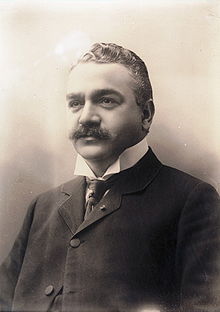
Bjorn Kjos (pictured) is one of the founders of Norwegian Air Shuttle and a plane-owner. He previously served as a pilot in the Norwegian Air Force, later becoming a lawyer. Like many Scandinavians, he has penned a thriller in his spare time. Kjos is well-known in his home country as the man who brought low-cost flying to one of Europe’s most expensive countries.
Last year, the airline he co-founded and runs,(NAS), placed the biggest aircraft order Europe has yet seen. It will buy 222 Boeings and Airbuses for around $10 billion, aiming to compete with Ryanair and easyJet, Europe’s champions of cheap aviation.By purchasing more-efficient planes, emissions are reduced and passengers are offered new and more comfortable aircraft.
------------------
 S-GoNorwegian was founded in 1993 with headquarters  in Fornebu, Norway. In June 2013,
Norwegian was voted Europe’s best low-cost carrier of the year by the renowned SkyTrax World Airline Awards. Norwegian offers better leg room than most competitors, in-flight WiFi, world-class punctuality and a fleet of 75 aircraft with an average age of only 4.6 years.  Norwegian has a clear goal of reducing emissions per flown passenger by 30% in the period 2008 – 2015.
--------------------
American travelers using the skyways also are having difficulties.

Airport terminals in the USA have seen many changes in recent times and ticketbuyers have been frustrated by restrictions, ticketprices and altered flight schedules. Airlines offer specials to lure travelers and some are almost too good to believe
---------------

One US traveler received a letter in the mail that looked like good news and the logo of the famous air service appeared to be authentic.He was informed that he’d won “ Two roundtrip tickets worth $1,298" postmarked at the city where this service is based. But while it all looked authentic, he was  skeptical. The notice went on to state:
“I am pleased to inform you that you have qualified for an award of two roundtrip airline tickets. Congratulations. These tickets are valid for travel anywhere in the Continental U.S. The retail value of this award is up to $1,298.00. Certain restrictions apply.We have attempted to contacting you several times without success. This is our last attempt. If we do not hear from you soon, we may need to issue the ticket vouchers to the alternate”.
Further investigation found variations between the logo and that of an existing company as well as minor changes in the real company’s name. The offer was a scam.
---------------
Consumer complaints against U.S. airlines rose sharply in 2012, even as the carriers claimed a better record of on-time arrivals and luggage handling. Those findings, from a recent report released  highlight the struggle to find ways to make money and maintain services for traveling public .The study highlighted the growing incidences of “bumping,” when a passenger shows up at the airport and finds out his seat has been sold to someone else.
-----------------
 
Rising fuel prices along with maintainance problems and consolidation was increased  by a  controversial  recently-passed budget law. This federally passed law became known as the" 2013 Sequestration " relating to budget cuts in federal spending that took effect March 1, 2013. Due to this act, the aviation industry has been forced to make many changes.The National Air Traffic Controllers Association, the union that represents the controllers and other workers, had predicted “a negative impact on the efficiency and capacity of the National Airspace System, as well as the nation’s fragile economy.” Airlines and airports across the country are struggling due to this recent federal  action recently passed by Congress that called for “across-the-board” federal budget cuts.
 -----------------
An airline analyst says it makes sense that people are going to be unhappy with the airlines today.
“As the industry continues to consolidate, capacity is  reduced, seats are packed closer and closer together and load factors get higher and higher. The travel experience becomes punishing,” says Robert Mann of R.W. Mann  Company, an airline industry analysis and consulting company. “Add fees for services previously considered part of the bargain and you have the recipe for discontent". According to USA Today ”FAA has  released figures  predicting that U.S. air travel will increase up to 1.3 billion passengers per year by 2031, up from the 737.4 million expected to fly in the U.S. this year .

Despite all the  hustle and crowded conditions in our skies and on our ground. Enjoy  the summer! It's a short season!